![Applied AI Chicago: Production Breakouts with Polaris, Zapier, Swan AI and GTM Buddy [AI Tinkerers - Chicago]](https://sloppy-joe-app.imgix.net/ai_tinkerers/logos/ai_tinkerers_-_chicago_laptop-sticker_190_521b1fc408a63ca839e3eddd61cf932f.png?w=300&fit=max&auto=format%2Ccompress&q=75)







Applied AI Chicago: Production Breakouts with Polaris, Zapier, Swan AI and GTM Buddy


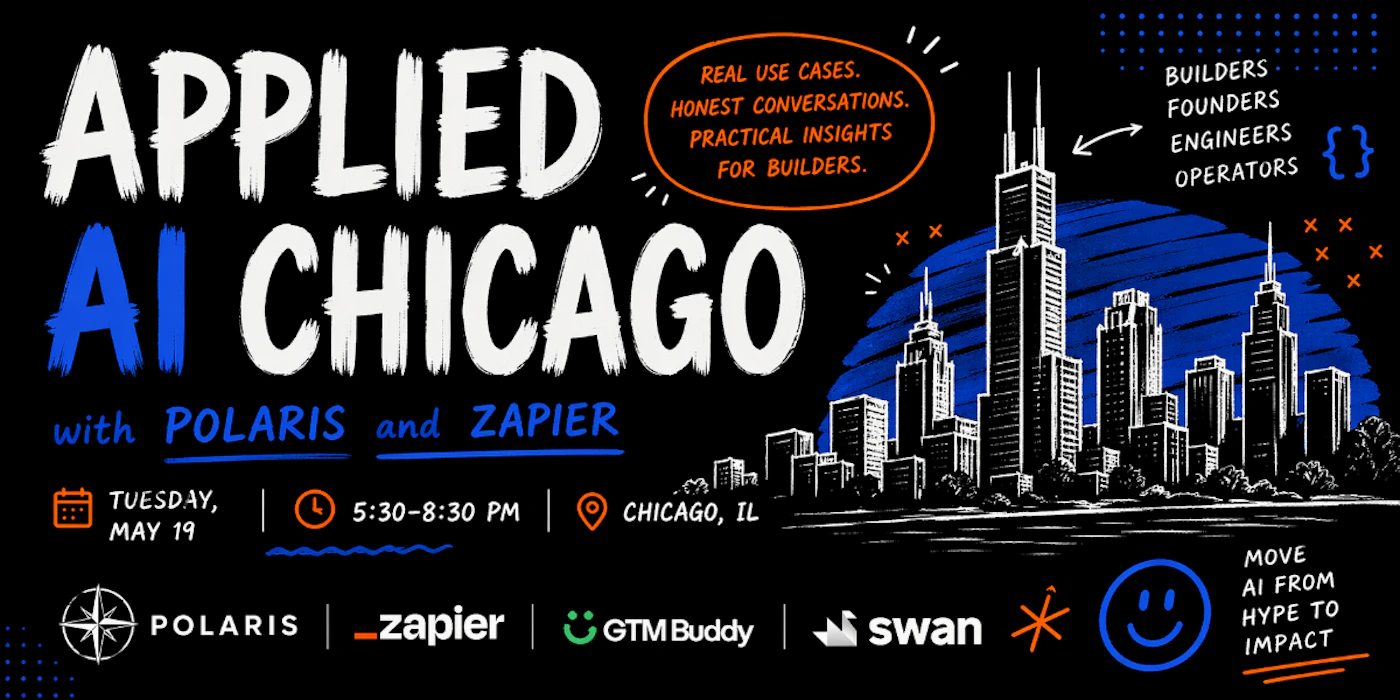
🛠️ Applied AI Chicago: Production Breakouts with Polaris, Zapier, Swan AI and GTM Buddy
On May 19th, we’re gathering Chicago’s most active engineers, founders, and operators at Drive Capital for a structured, discussion-driven evening. This is a builder-first environment designed to move past the hype and into the technical edge cases that define real-world implementation.
We’re moving away from the traditional panel format for this one. Instead, we’ll rotate through three rounds of small-group breakout discussions (7-10 people) focused on high-stakes technical decisions. You’ll leave with documented patterns, specific failure modes to avoid, and a clear view of how teams at Polaris and Zapier are navigating autonomous agentic workflows and production-grade guardrails.
🗣️ Discussion Themes
- Production Reality vs. Skepticism: Where is AI delivering measurable value today, and where are we still seeing high-latency, low-reliability experiments?
- The Stickiness Gap: Why do promising early prototypes fail to integrate into long-term workflows? We’ll analyze the friction points in data pipelines and user incentives.
- Human-in-the-Loop Architecture: As models improve, which decisions must remain human, and how do we design robust guardrails for autonomous systems?
🎙️ Lead a Breakout
We’re looking for active builders to facilitate our rotating breakout rounds. This is not a platform for pitches; it is an opportunity to share a specific production challenge or a hard-won lesson from your current AI stack. If you are wrestling with agentic orchestration, KV cache optimization, or local execution with tools like Gemma 4 or TurboQuant, we want you leading a table.
Apply to Lead a Breakout Discussion
🥽 Speakers
Building an Agent-Human Interactive Video Studio

Pat Narendra
Founder @ spatialsolutions.ai
Building a Chat-First AI Sales Cockpit Solo — The Anti…

Hugh Robertson
Sales Development Representative @ UL Solutions
🗓️ Schedule and Logistics
- Date: Tuesday, May 19, 2026
- Time: 5:30 PM – 8:30 PM
- Location: Drive Capital, Chicago (Exact address provided upon approval)
- Format: Structured Breakouts & Technical Networking
🛡️ Curation Policy
Attendance is strictly limited to 150 practitioners. We screen every registration to ensure the room is filled with people who can pop the hood and share their stack. Space is limited and events consistently run with a waitlist.
🤝 Our Partners
Polaris provides enterprise-grade autonomous agents designed to automate complex technical workflows in software development and IT operations.
Zapier is the leader in AI orchestration, integrating with over 9,000 apps to enable seamless data movement and automated business processes.
Drive Capital is a venture capital firm partnering with founders across North America to build market-defining companies from seed to IPO.
Swan: Swan is Your AI GTM Engineer - Turn any GTM process into an agentic workflow in seconds, from prompt to pipeline. Scale demand and revenue with intelligence, not headcount.
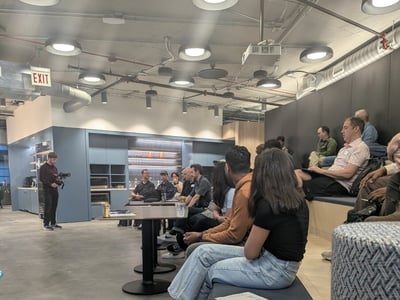
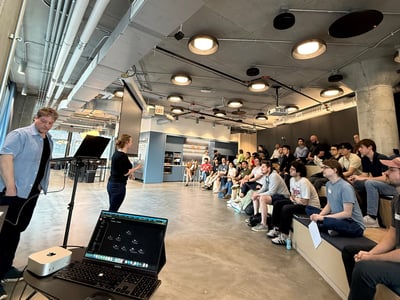
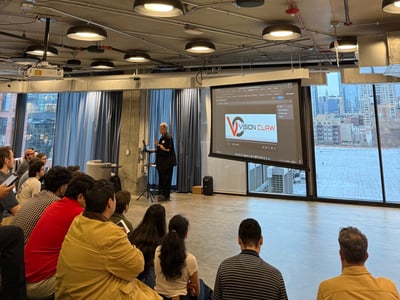
Event photos
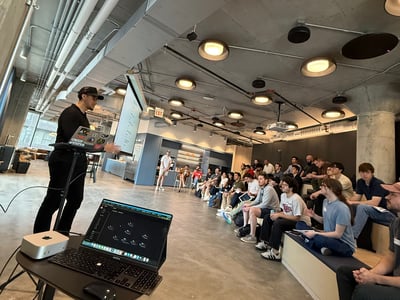
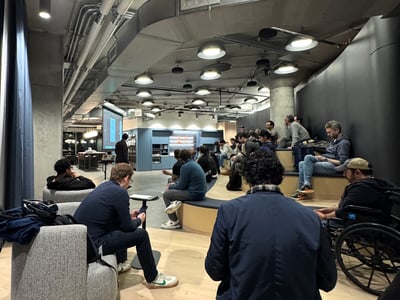
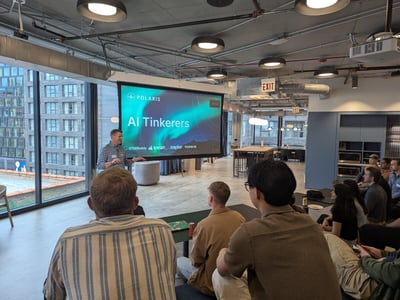
📊 AI Tinkerers Chicago Stats
- Attendees: An exclusive network of 2,167 AI professionals, this community consists of 88% machine learning specialists, 74% software engineers, and 58% cloud infrastructure experts. Notable achievements include members pioneering production-grade agentic workflows, deploying custom LLM pipelines in regulated healthcare and fintech sectors, and spin-outs securing venture backing from premier global accelerators.
- Companies Represented: Featuring tech giants like Google, Microsoft, and NVIDIA, alongside fast-growing platforms such as DoorDash, TikTok, and GitLab, and innovative startups like ElevenLabs, Pinecone, Speechify, Baseten, and HumanLayer, and more
- Demos: 182 demos have been submitted and 107 have been presented. The most exciting themes have focused on agentic systems (often coordinated via tool calling and structured handoffs), robust retrieval-driven applications (including graph/vector/RAG variants), and production-minded reliability (schema enforcement, guardrails, and eval/observability loops). Technical highlights have also included multimodal pipelines (OCR, voice, image-to-structure) and cost/performance optimization for real deployment.
- Testimonials:
A great demo, per the strongest examples, feels like a working technical artifact plus a teachable pattern: it should solve a specific engineering challenge, show the mechanism (ideally with inspectable intermediate artifacts like structured outputs, logs, orchestration graphs, or “contracts” between components), and provide reusable lessons/trade-offs other builders can apply. This aligns with the speaker-form requirement to avoid slide decks/marketing pitches and instead demonstrate working software, messy experiments, or architectural walkthroughs. Demos do well when they make “correctness/robustness” or “human agency” tangible through the system’s structure (e.g., building safer behavior into the architecture, separating responsibilities like abstention/routing/approval, and providing a durable interface where the human can review and edit rather than relying on vague prompt instructions). Conversely, avoid demos that read like landing pages, have missing/placeholder content, or don’t clearly show the core implementation details and what audience members can observe directly—especially if the main takeaways are generic or marketing-oriented rather than concrete and builder-focused.
In Chicago, Pat Narendra’s Agentic Video Studio: Building a Human-Editable AI Video Synthesis System stood out for its agent workflow where output becomes inspectable/editable project state rather than a one-shot “AI made a video.” The key reason it’s compelling is the explicit contracts (scene-first manifests, human approval surfaces, and deterministic compilation), which makes the workflow feel like engineering instead of magic. Also in Chicago, Luis Cisneros’ Teaching a Clinical Multi-Agent System to Say I Don’t Know earned a perfect score in the provided data by demonstrating abstention and calibrated uncertainty in a clinically grounded multi-agent setup; it’s engaging because the system surfaces interpretable disagreement and formally routes cases outside its tolerance rather than averaging everything into confident text. Finally, James Meyer’s 5 Human Sparks - What is work in the AI future? scored 5/5 by reframing the human-AI relationship with a clear framework (Judgement, Presence, Empathy, Creativity, Purpose), addressing audience anxiety about AI replacing work by shifting from hype to a design philosophy that builders can apply when deciding what should remain human.